
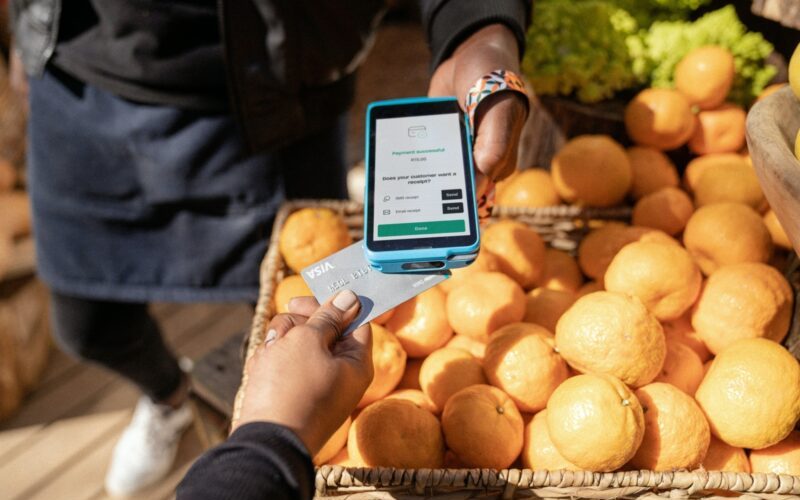
In October 2025, Wave, the Senegalese fintech that had disrupted mobile money across West Africa, created Wave Bank Africa S.A., a fully licensed commercial bank headquartered in Abidjan with CFA 20 billion in capital. A few months earlier, the Central Bank of Nigeria had upgraded Kuda, OPay and Moniepoint to national microfinance bank licences, lifting geographic restrictions on their operations.
African mobile operators are scaling, maturing, and converging toward banking. So, is Africa ready for neobanks? Not in terms of market demand, which is evident, but in terms of the conditions that allow a digital bank to sustain itself, serve the populations it claims to target, and do so without creating new risks for the financial system.
A market that narrows at the point of entry
According to the World Bank, 57% of the African population remains unbanked. Ninety percent of transactions in sub-Saharan Africa are conducted in cash. An estimated 60 million micro, small and medium enterprises are underfinanced. Mobile money has demonstrated that Africans will adopt digital financial services: $1.4 trillion flowed through mobile wallets on the continent in 2025. The demand is not in question. But the neobanks now emerging in Africa are not building from scratch. They are mobile money operators migrating toward banking. Wave had 21 million active users before creating Wave Bank Africa. OPay and PalmPay built their networks through payment services before seeking upgraded licences. The strategic logic is obvious. Mobile money margins are thin, and the path to sustainable revenue runs through banking, lending, deposit collection, and maturity transformation.[1]
The difficulty is that the client base built under a mobile money licence does not transfer to a banking licence. Mobile money in most African jurisdictions operates under tiered KYC: a basic account can be opened with a phone number and a name. This is what enabled rapid scaling. Banking requires full KYC compliance: formal identity documents, proof of address, and verification procedures that are significantly more demanding. When Wave transitions from EMI to bank, the 21 million users do not become 21 million banking clients. The base may shrink mechanically at the point of regulatory transition, because a proportion of mobile money users lack the documentation required to open a bank account. Ky, Rugemintwari and Sauviat (2021), using individual-level data from Burkina Faso, showed that mobile money and the formal banking system coexist as parallel circuits, not as a pipeline from one to the other. Grzybowski, Lindlacher and Mothobi (2023) found that the individuals most likely to be financially included are male, wealthier, more educated, and older. The addressable market for a neobank is real, but considerably narrower than the mobile money base from which it emerges.
Suppose, however, that regulators adapt and create lighter onboarding for digital banks. The problem shifts but does not disappear. A client acquired through a simplified digital process, without physical interaction, without the inertia of a branch relationship, is a structurally more volatile client. They arrived with a tap; they can leave with a tap. In traditional banking, deposit stability is supported by switching costs, geographic proximity, and relationship inertia. In a digital-only environment, these stabilising forces are absent. The deposit base may be large in number but fragile in character. This feature constrains exactly the activity that justifies the banking licence, which is maturity transformation.
The funding equation
To understand why neobank viability in Africa is not a matter of technology or product design but of financial structure, it is necessary to return to how banks make money. A bank collects deposits, which are short-term and can be withdrawn at any time, and lends them out at longer maturities, earning the margin between the two rates. This maturity transformation is the source of banking profit and is also the source of banking fragility, because it depends on the stability of the deposit base. If depositors withdraw faster than loans mature, the bank faces a liquidity crisis.
In sub-Saharan Africa, both channels through which banks fund themselves, deposits and market funding, are structurally constrained. Capital markets are shallow, access to international bond markets is costly and intermittent, the interbank market is limited, and the deposit base is narrow. The IMF has described the region’s situation as a “big funding squeeze.” In the WAEMU zone for example, bank credit to the economy remains below 30% of GDP, and 400 large companies absorb 30% of all bank credit, leaving the vast majority of the productive fabric underserved. Even well-established banks with decades of presence and branch networks struggle to mobilise sufficient stable funding.
For a neobank, this constraint is amplified. Without branches, deposit collection depends entirely on digital channels, and the deposits are inherently more volatile. Demirguc-Kunt and Huizinga (2010) have shown, in a broad cross-country study, that the structure of bank funding is a primary determinant of risk and return: banks that rely on less stable funding sources take on more risk and are more vulnerable to shocks. Khan, Scheule and Wu (2017) demonstrate that funding liquidity directly shapes bank risk-taking behaviour, with institutions facing tighter funding conditions more prone to excessive risk. These findings, established for traditional banks, apply with particular force to neobanks, where brand trust must be established from scratch, access to central bank refinancing is typically limited or unavailable, and the alternative source of funding, venture capital, has contracted sharply (global fintech investment fell approximately 40% from its 2021 peak). The result is that African neobanks face a funding environment that is more hostile than the one faced by traditional banks, precisely at the moment when they need stable, long-term funding most, because the clients they are bringing into the formal financial system for the first time require patient intermediation, not short-term transactional relationships.
TymeBank in South Africa is a perfect illustration. The bank holds a full licence from the SARB, has attracted 15 million customers, and recorded its first profitable month in December 2023. But its audited accounts for the year ending June 2025 show accumulated losses of 7.3 billion rand and a net loss of 218.8 million rand. The auditors flagged a material uncertainty regarding the company’s ability to continue as a going concern[2] beyond October 2026 without additional capital. The bank’s survival depends not on its deposit base but on the continued willingness of its shareholders to fund losses.
The contrast with European neobanks is instructive, though the lessons must be drawn carefully. Revolut, which began as an electronic money institution in the United Kingdom in 2015, secured a European banking licence in Lithuania in 2021 and now serves over 50 million customers globally at a $45 billion valuation. Its trajectory, from payment operator to licensed bank, mirrors that of Wave or OPay. But Revolut operates in conditions that are fundamentally different from the African context. It grew in a market with universal identification (national ID cards, passports, standardised address verification), meaning the KYC barrier that constrains African neobanks does not exist. It has access to deep European capital markets, to central bank facilities through its banking licence, and to a deposit insurance scheme (up to €100,000 per depositor). Crucially, Revolut is not bridging an inclusion gap: it is offering a cheaper, more flexible form of banking to customers who are already served by a mature financial system. Its funding base is stable because its customers are documented, embedded in regulated economies, and protected by institutional backstops that have been tested by crises.
Monzo in the United Kingdom reached 13 million customers and reported its first full-year profit in 2024 on revenue of £1.24 billion. Yet Monzo received a £21 million fine from the FCA in 2025 for inadequate anti-money laundering controls during its period of rapid growth, and Starling Bank was fined £29 million for similar failures the year before. In Germany, BaFin imposed a cap on N26’s customer onboarding in 2021 over compliance deficiencies, effectively throttling the neobank’s growth at a critical moment. Even in jurisdictions with deep capital markets, universal identification, and well-resourced regulators, the tension between scaling and compliance proved difficult to manage. The lesson is not that European neobanks have solved the problem. It is that they operate in an environment where the funding base, the identification infrastructure, and the regulatory backstops make the problem manageable. In Africa, these conditions are largely absent.
Why regulation matters more, not less
If the market narrows at entry and the funding base is fragile, the instinct might be to lighten regulation to give neobanks room to grow. This might backfire. Wagner (2007) demonstrated theoretically that while greater bank liquidity reduces the probability of bank runs, it can also lead banks to increase risk-taking. Prudential regulation exists for precise reasons: to protect depositors, to prevent excessive risk-taking, and to ensure that institutions collecting savings and extending credit can absorb losses without destabilising the broader system. These reasons apply with at least equal force to neobanks, and in some respects with greater force, because the risks they carry are different in nature from those of traditional banks.
The main question is whether the existing architecture fits what neobanks are, and whether the same barriers that constrain traditional banks will have the same coercive force on risk. The banking literature has shown that the introduction of requirements on liquidity or capital leads to measurable reductions in bank default risk. But they can also constrain profitability. For an established bank with diversified revenues, this trade-off is manageable. For a neobank that has not reached breakeven, the cost of holding liquid assets that generate little return or mobilising capital while building a customer base can be prohibitive.
To date, the prudential architecture facing neobanks in Africa has barely evolved. In South Africa, TymeBank operates under the same prudential rules as Standard Bank or FirstRand. Maximum credibility, maximum regulatory cost, on a structurally loss-making institution. In Nigeria, the CBN chose not to create a dedicated digital banking licence, instead upgrading fintechs within the existing microfinance bank tier, which limits their services but applies a lighter burden. In the WAEMU zone, Wave made the leap from EMI to fully licensed bank, accepting the full suite of prudential obligations. None of these approaches constitutes a framework designed for what neobanks actually are: institutions with elevated operational risk (technology failures, cybersecurity), concentration risk (narrow product range, limited customer segments), and deposit volatility, but typically less maturity transformation than traditional banks, at least in their early years.
Other jurisdictions have experimented with proportionate frameworks. Singapore’s Monetary Authority created a dedicated digital bank licensing framework in 2020, with tiered capital requirements that start lower than for traditional banks and increase as the institution scales. The framework explicitly recognises that digital banks carry different risks and should not be shoehorned into a framework designed for a different institutional form. Malaysia adopted a similar approach, issuing five digital banking licences in 2022 with a phased capital regime. In Brazil, Nubank, now the world’s largest neobank with over 100 million customers, grew under a regulatory environment that permitted lighter capitalisation in the early stages while progressively tightening requirements as the institution scaled.
The common thread is proportionality: regulation that is calibrated not to the institutional label (bank or non-bank) but to the actual risk profile at each stage of development. This does not mean lighter regulation. It means different regulation, one that recognises that the risks of a digital bank with 2 million customers and no loan book are not the same as those of a universal bank with 20 million customers and a century of maturity transformation. As the neobank grows, the regulatory requirements grow with it.
An institution Africa needs, on conditions it has not yet created
Neobanks will become a reality in Africa. They are needed, not merely to digitise payments, which mobile money has already achieved, but to ensure financial intermediation: the transformation of savings into credit, of deposits into productive investment. This is the function that the continent’s economies most lack, and it is the function that neither mobile money in its current form nor the traditional banking sector in its current reach can adequately provide. But for neobanks to fulfil this role, policymakers need to create the conditions for them to perform. That means addressing the identification infrastructure that determines who can be a client, the funding environment that determines whether a digital bank can sustain itself, and the regulatory architecture that determines what risks it can take and how it is supervised. Without these conditions, the most likely outcome is the emergence of digitised traditional banks, institutions that replicate the same narrow client base, the same funding constraints, and the same limited reach as their brick-and-mortar predecessors, but with a different set of operational risks.
The simplest path, already visible in some markets, is for mobile money operators to operate under the backing of a traditional bank, effectively becoming a digital branch. This is straightforward from a regulatory perspective and mirrors the model of several European neobanks that are subsidiaries of established banking groups. But it limits transformation: the neobank inherits the risk appetite, the capital constraints, and ultimately the strategic priorities of its parent. For Africa’s mobile money operators to genuinely transform into autonomous banks, or for new neobanks to be established from scratch, deeper work is required. That work should consider proportionate capital and liquidity frameworks calibrated to the digital model, interoperable digital identity systems that bridge the gap between mobile money KYC and banking KYC, and mechanisms to stabilise the deposit base of institutions that lack the branch networks and relationship inertia of traditional banks.
References
Demirguc-Kunt, A. & Huizinga, H. (2010). Bank activity and funding strategies: The impact on risk and returns. Journal of Financial Economics, 98(3), 626-650.
Grzybowski, L., Lindlacher, V. & Mothobi, O. (2023). Mobile money and financial inclusion in Sub-Saharan Africa. Information Economics and Policy, 65, 101064.
Khan, M.S., Scheule, H. & Wu, E. (2017). Funding liquidity and bank risk taking. Journal of Banking & Finance, 82, 203-216.
Ky, S.S., Rugemintwari, C. & Sauviat, A. (2021). Friends or Foes? Mobile money interaction with formal and informal finance. Telecommunications Policy, 45(1).
Wagner, W. (2007). The liquidity of bank assets and banking stability. Journal of Banking & Finance, 31(1), 121-139.
IMF (2023). Regional Economic Outlook: Sub-Saharan Africa. The Big Funding Squeeze.
[1] Maturity transformation: the core function of banking, which consists of collecting short-term deposits and using them to fund longer-term loans. This mismatch is the source of banking profit but also its principal vulnerability. ↩
[2] Going concern: auditors’ assessment of whether a company can continue to operate for the foreseeable future. A going concern uncertainty is a formal warning that the company may not survive without additional capital. ↩